

Servo Drives for Industrial Motion Control
High-performance drive solutions for cabinet-based, decentralized, embedded and long-lifecycle machine architectures.
Servo Drive Selection Overview
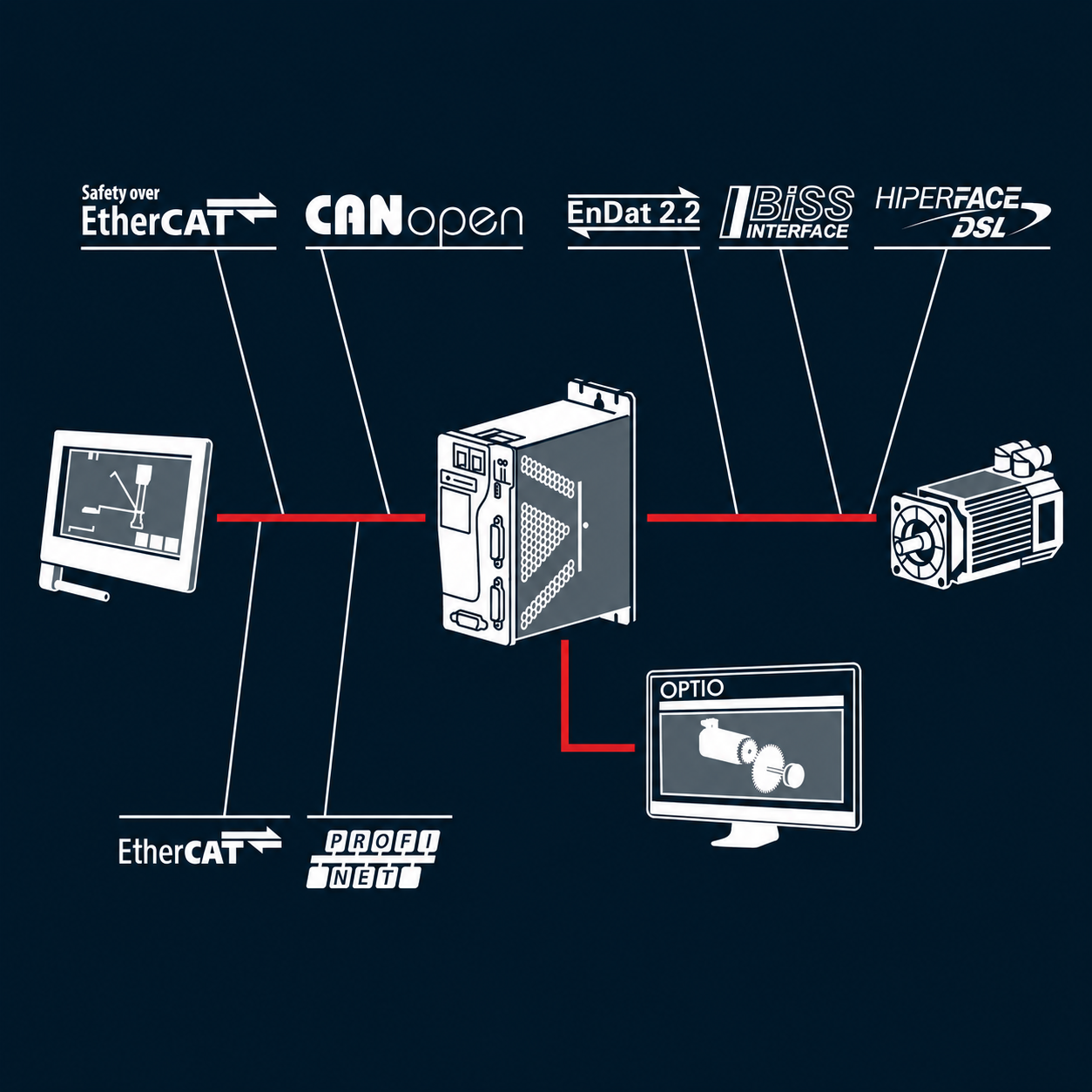
Our drive portfolio supports widely used fieldbus protocols, including EtherCAT, CANopen and PROFINET, together with motor feedback interfaces such as EnDat, BiSS-C, Hiperface and Tamagawa. Infranor also controls key manufacturing steps in France, with servo drives assembled and electronic boards produced and tested on site.
These drives can be combined with Infranor servomotors and the broader motion control product range. For sizing details, manuals and software resources, consult the technical documentation for each drive family.
How to Choose the Right Servo Drive
Selecting a drive depends on more than power rating. The right choice is determined by the machine architecture, supply voltage, peak current, fieldbus protocol, feedback device, safety requirements and integration constraints.
1. Define the machine architecture
Start with the physical integration: cabinet-mounted, decentralized, embedded, or battery-powered. This choice narrows the drive family before detailed sizing begins.
2. Check voltage and current requirements
Match the supply voltage, nominal current, and peak current to the axis duty cycle. Dynamic axes often need higher peak current margins than simple positioning axes.
3. Select the fieldbus protocol
Choose the drive interface according to the machine controller and network architecture, such as EtherCAT, PROFINET or CANopen.
4. Match the motor feedback interface
Confirm compatibility with the motor feedback device, including resolver, EnDat, BiSS-C, Hiperface, or Tamagawa interfaces where required.
5. Consider safety, environment and lifecycle constraints
Review safety functions, mounting environment, thermal constraints, service needs, and long-term availability before finalizing the drive architecture.
Need help sizing your motion application?
Infranor engineers can help review your machine architecture, load profile, motor sizing, feedback device, fieldbus protocol and lifecycle requirements to identify the most suitable drive solution.
Contact usServo Drive Selection Guide
Use this guide to map your machine architecture to the most relevant Infranor range before reviewing detailed specifications.
| Machine requirement | Recommended range | Why this range | Typical use | |
|---|---|---|---|---|

|
Demanding multi-axis AC motion application | PacHP | Supports industrial communication fieldbuses such as EtherCAT, PROFINET and CANopen, making it suitable for synchronized multi-axis automation architectures. | Multi-axis industrial machines, high-precision axes |

|
Safety-oriented machine architecture | PacHP-SF | Provides TÜV-certified SIL2 safety functions for machine architectures where risk assessment requires safe torque removal. | Safety-oriented machines, guarded axes, controlled stop applications |

|
Compact on-machine integration | IRD | Compact and lightweight, EtherCAT embedded drive designed to be mounted directly on the motor. | Robot joints, compact machines, reduced cabling |

|
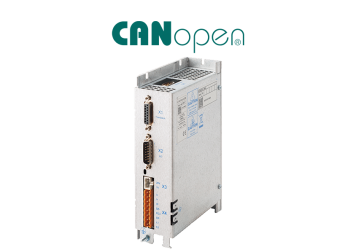
Low-voltage autonomous simple application | Easy 60Vdc | Low-voltage CANopen servo drive range, shock resistant, battery-powered | AGVs, AMRs, mobile robotics, embedded axes |
|
Cost-effective simple 230 Vac industrial application | Easy 230 | Simple 230 Vac CANopen servo drive option for compact cabinet integration and standard machine axes. | Standard machine axes, compact cabinet integration |

|
Existing machine support or long lifecycle | CD1 | Long-established servo drive platform; useful for installed-base support, maintenance and retrofit | Machine maintenance, legacy machine support, retrofit applications |
|
Need help sizing your motion application?
Share your axis requirements, load profile, supply voltage, feedback device
and communication protocol.
Infranor can help validate the right servo drive range.
Contact an expert
|
||||
Servo Drives for Every Machine Architecture
Explore Infranor drive ranges by architecture, supply type and lifecycle requirement. Each range is designed for a specific integration context.
AC Servo Drives
Compact AC servo drives for cabinet-based machines, multi-axis systems and safety-oriented industrial architectures.


PacHP
High-dynamic AC servo drive for cabinet-based multi-axis machines requiring compact integration and stable motion performance.
- Supply: 230/400 Vac
- Max Current :8/20/45/100/200 Aeff
- Embedded STO SIL 3 function
- Fieldbus: EtherCAT, CANopen and PROFINET options
- Feedback: EnDat, BiSS-C, Tamagawa, Hiperface, resolver, Sin/Cos, TTL and Hall sensors
- Configuration: flexible parameter setup via options, SDO and PDO mapping

PacHP-SF
Safety-oriented variant designed for machines requiring functional safety.
- Supply: 230 / 400 Vac
- Max Current: 8/20/45/100/200 Aeff
- Safety: TÜV-certified SIL2 safety function
- Safety I/O: 6 dual-channel safety inputs
- STO response: input activation to motor torque-off ≤ 10 ms
- Best fit: safety-oriented machine architectures
DC & Embedded Servo Drives
Servo drives for decentralized, compact and low-voltage machine architectures, including mobile and embedded applications.
IRD
DC decentralized servo drive for compact machines, robot joints and on-machine integration close to the motor.
- Supply: 48Vdc
- Max Current: 24/60 Aeff
- STO-SBC SIL 3 function
- Feedback: dual BiSS-C, TTL and Hall sensor compatibility
- Use case: embedded and decentralized motion
Easy 60Vdc
Low-voltage servo drive for battery-powered, embedded and mobile robotics applications.
- Voltage: 24 to 60 Vdc
- Max Current: 10/20/60/120 Aeff
- Shock (15g) and vibration(4g) resistance
- Feedback :SinCos track, TTL (with or without Hall effect sensors), Hall sensor only or sensorless mode
- Use case: Low voltages cost-sensitive applications
Compact & Long-Lifecycle Servo Drives
Complementary drive ranges for simple cost-sensitive axes and long-lifecycle support: The Easy 230 for basic 230 Vac applications, The CD1 for maintenance, retrofit and reproduction of existing installations.
Easy 230
Compact 230 Vac servo drive for standard industrial axes requiring a simple and cost-effective cabinet architecture.
- Supply : 230Vac | Max Current :17A
- Simple to use Compact design
- Allows to use standard DS402 functions
- Use case: standard machine axes
CD1
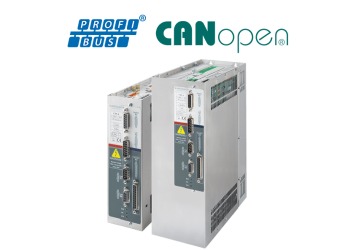
Proven industrial servo drive for maintenance, retrofit and long-lifecycle machine support.
- Supply:230/400Vac
- Max Current: 16.5 Arms (230V version) to 90 Arms (400V version)
- Resolver and encoder feedbacks
- declined in RS232/CanOpen/PROFIBUS versions
- Lifecycle: long-term availability
Advanced Servo Tuning and Servo-Loop Commissioning
For high-dynamic machines, standard auto-tuning may not be enough. Mechanical resonance, bandwidth limits and following-error validation can require a more controlled commissioning workflow.
Discover how PacHP and OPTIO support advanced servo tuning through machine-dynamics identification, bandwidth adjustment, resonance filtering and final motion validation.
Explore advanced servo tuningServo Drive FAQ
Short answers to common questions about drive selection and integration.
How does a servo drive work?
A servo drive receives motion commands, checks motor feedback, and adjusts power to the servomotor in real time. This closed-loop control keeps the machine axis accurate, smooth and repeatable.
Why choose Infranor for servo drives?
Seamless System Integration
Whether designing a complete line or replacing a single axis, our drives adapt. Full compatibility with standard protocols (EtherCAT, CANopen, PROFINET) ensures seamless integration.
Certified Reliability
Built to last. European manufacturing and industrial-grade component selection. Our drives are covered for 3 years with a MTBF over 100,000 hours.
Industrial Longevity
Zero forced redesign. We keep our product ranges active for over 10 years, ensuring your machines stay in the catalog without additional engineering costs.
How do I choose the right Infranor servo drive?
Selection depends on the machine architecture, supply voltage, current requirements, fieldbus protocol, feedback interface, safety constraints and lifecycle expectations.
Which fieldbus protocols are supported?
Infranor servo drives support widely used industrial communication protocols including EtherCAT, CANopen and PROFINET, depending on the drive range and configuration.
Can Infranor servo drives be used with any servomotors?
Infranor servo drives are designed to work with Mavilor servomotors from the Infranor Group. They can also be integrated into broader servo-based motion control architectures depending on voltage, feedback and application requirements.
Which servo drive is suitable for mobile robotics?
For compact mobile robotics or robot-joint integration, IRD is the most relevant range because it is designed for decentralized DC architectures close to the motor. Easy 60Vdc is better suited to simpler low-voltage autonomous applications.
Where can I find technical documentation?
Technical documentation, manuals, software tools and sizing resources are available for each drive family through the Infranor documentation and downloads resources.
Servo Drive Documentation and Technical Support
Get Help Selecting a Servo Drive
Reach out to us for more details or assistance with your motion control applications.
Contact us →Access Servo Drive Documentation
Looking for manuals, CAD files, or firmware resources? Access our library.
Access Downloads Center